

I’ve been reflecting on many things lately, as I read a good bit of this community’s work, and your posts, your notes; I get to comment on it, learn from it, participate in it, which is one of the great features about our social media platform that we have here. I really appreciate you guys and this vehicle we have here. We get to write our stuff down and enjoy a community of feedback direct from creator to consumer.
We get to understand more about our world and ourselves.
Been thinking lately about this generation that I came from and how we play in the new world order. I’m smack dab in the heart of it, in the 1972 vintage which is literally a 50/50 split between the Boomers and the millenials.
Everybody rages about the myriad wrongs of the Boomers, and their battles with the Millennials (GenY), and subsequent to them the post-Y2K Gen Z, Gen Alpha, and now that it’s 2024… well… all these Gens are in the books and you can bet your bottom dollar that an interesting new Generation is beginning in this year 2024 of our lord. That may be the understatement of the century.
My parents were the “Silent Generation” / war babies. They literally were war babies, born in the UK and the Netherlands a few years in advance of the war that the Greatest Generation fought, and they lived through that war. My dad lived on occupied territory and he saw Gestapo men abuse my Opa. He saw supply ships cut off completely, he ate fish exclusively for 4 years, and he ended up as silent as a man can be, with a visceral disgust and loathing toward fish (my favorite food).
My dad said very little. He worked a lot. He gave us everything that he could, but he could not give us warmth, comfort, engagement as a Dad should. He was a good man, but he was not capable of these things. He grew up in a war fought by a tyrant, under a literal tyrant at home (his mother, my Oma.). His was destined to be the path of stoicism. How could it not?
He was quiet. He drank a lot. He had a farm (hobby farm), he did carpentry (I would watch at times but wasn’t invited to participate). He kept to himself and his one demand was peace and quiet - always. He was not expressly violent, but he had temper. And when me or my brothers disturbed the peace he needed (and he needed it), we paid a price. His anger at times would have me shaking in paralytic fear. He would not tolerate a single sleight to his authority.
So we (my two brothers and I, me in the middle), grew up with a good measure being repressed and angry all on our own. But we knew respect, and we knew hard work, and he showed us these things. I thank him for those things.
But I had a hard time with socializing. I too was drawn inward and stoic. When we came over from the old world in 1980, in to Canada (another stop on my way to the USA), I was quiet and withdrawn. I would quietly make friends, and notice how unafraid they were to express themselves. They would joke and rib me about being so quiet; I’d barely speak. I’d watch my friends in disbelief as they would actually express themselves to their parents, in some cases they’d even bicker with their parents. This was something completely different to me and I was captivated.
Coming from all this, I found myself to be both an outside observer in this alien land of freedom and expression, and also a willing participant to the GenX experience.
The freedom and the innocence.
In the New World, we traveled a lot as my dad searched out different jobs in different locations. I lived in Labrador way up in the northeast, Newfoundland just below it in the maritimes, small villages usually. Lots of moves. My dad was a doctor but had no recognized practicum in the New World and needed to go to the places nobody really wanted to go to get those internship positions so that he could once again receive his professional accreditation.
He left a good position on our small Island in Friesland, NLD, to start anew on this journey in Canada. They told us the move was “for us", but I know my dad enough to know that the blood feud between him and his brother (The doctor and the dentist) on that same small island which ended up with a confrontation involving a shotgun was the real driver for this change, with us boys benefiting from it as a side bonus.
In all these places I had absolute and total freedom. We came and went as we pleased, and we were always on our bikes and out in the natural world, on beaches, in the woods, making bonfires, building forts, fishing, shooting, hopping on floating ice patties, floating on rafts, riding snowmobiles, skiing, tobogganing , playing ice hockey on frozen inlets, and just living a life of freedom. I don’t remember any rules - we just came home when it got dark and we got hungry.

We saw these things.
And when we moved to the Pacific Northwest side of the country, to a larger resource-based town, it was still the same thing; only by then we were driving ourselves, drinking beer, smoking weed, cruising around to parties, camping, and just doing more of the same. Whatever we pleased. My parents really didn’t mind, and they let us go and do whatever we wanted.
We were truly GenX. We watched some of the best of Saturday night live, and we bridged the gap between Led Zeppelin and Nirvana. We met (often with barely a phone call), at parties, at keggers, we rode dirtbikes, drove trucks, we got lost in the hills, we met random dudes drinkin’ mouthwash out of the backs of Ford Pintos. We disregarded authority. The ethos was “work hard, make some money, get as much of a good time as you can, while you can, and down the line figure out a job or a career or whatever.”
Latchkey kids? I guess so. My high school experience was something out of “American Graffiti” meets “Dazed and Confused”. We were those kids. We thought very little of the problems of the world, and we lived in the moment. We were not called upon to be “good stewards of the collective global community” and to somehow be responsible to tackle its myriad crisis and existential threats.
Short of a distant concern that Mother Russia was over there with an arsenal of world-ending technology, it was enough to know that Reagan and Thatcher would hold the line and nothing truly bad was gonna happen. (And I’m not advocating for Reagan here either - he did a lot of bad shit that down the line we still pay for today); but they were good statesmen, Gorbachev was thankfully not a psycho, and we watched what we thought was the end of fear and the end of war and the end of terror - and naively assumed that sort of a global threat would never need to re-emerge.
We were Chris Farley, Eddie Murphy, the Cosby kids, Phil Hartmann, Jon Lovitz, Axl Rose, Chris Cornell, Bill Murray, Ferris Bueller. We didn’t understand anxiety as a thing to be discussed nor analyzed or addressed. (I had my own living under a stern authority figure, but the world was my escape and it was infinite).
SNL really gave us direction on how to think about authority. We paid little attention to politics, save for watching shows like this religiously. We saw how they absolutely skewered team Blue and team Red equally for the ridiculous caricatures of themselves; Dana Carvey as George H.W. Bush, Jon Lovitz as “swarthy” Michael Dukakis. I mean I had no idea what a Republican or a Democrat was, I just knew they were all to be made fun of in equal measure.
We had Chris Farley, for god’s sake. We had Chris fuckin’ Farley.
We talked about the environment, sure we did - we had the Ozone hype that came and went, and we had a world view that was more tailored to “Do things that are good for the environment, but do them locally”. (think globally, act locally) Unless, of course, we were busy having a good time.
Nobody was told how to think, or how to be. Nobody, certainly no “experts”, or “computers”. Apart from just common sense values, morals, and respect for others. We laughed at any adults that took a strong authoritarian approach to us. They were not to be taken seriously. We knew there was a future out in the world somewhere for us to take on at our own time, on our own terms.
We were/are a small generation, and nobody even understands who the hell we are. We were raised on irony and fun-loving cynicism.
As a relatively new grandparent (4-year old boy), I’ve now earned my right to rant about the good old days and try to shed a little context on how things have evolved across these decades (sorry Boomers, it’s our turn) . I’ll apply a little generational comparison.
Whereas a boomer grandpa might be the kind of serious, angry “get the hell off my lawn you kids!” grandparent (OK Boomer!), or maybe a respectful kindly old soul that’s gonna take the grandkids out for ice cream, a Gen X grandpa like me is the guy who’s likely gonna channel Chris Farley, and end up winding a shopping cart to max speed down an empty grocery aisle with his grandson riding up front screaming like a maniac “faster, Opa! faster!”
And if I see those kids on my lawn I’d probably challenge them to see how much air they can get on their bikes if I help them set up a ramp, and tell them how I did it better and how my brother almost landed his back wheel on my head trying to jump me length-wise on his bike.
Millenials, on the other hand, once they remove the broom-handles from their asses and put down their current electronic edition of The Atlantic describing the latest existential threat that “the community of virtuous people (with me as the authority spokesperson)” needs to respond to, and having posted a thoughtful, credentialed, authority-worshipping social media reply that highlights their own virtue and sacrifice in deference to the common good, will then ask those “kids on the lawn” to produce permits or notarized statements from their parents that allow them to be out of the house and temporarily out of sight from their guardians, and maybe establish some strict “anti-bullying” guidelines while the kids are gathered on the lawn. They might also encourage a group therapy session so everybody can drone on about what they’re all thinking about how they’re feeling about how they’re thinking. They are the self-seeking buzzkills in the line of Generations.
No, I’m not broad-brushing everybody; feel free to be different. Yes, I am describing generational trends as groups.
Gen Zs, those poor souls in their early-mid-twenties, are looking for direction from both us in GenX (parents), and the Millenials (teachers/counselors), as well as their smart-phones. So their choice of authority and direction is either the class clown, the self-indulgent pseudo-intellectual turtle-neck wearing professor, or ChatGPT.
None of these are great options, so they’re all over the map. Literally, physically, and metaphorically.
I’ve just learned overall that life is still not meant to be taken seriously. There’s plenty of time to do just that if and when we want, and believe you me, I have plenty of my own anxieties that I can whip up at a moment’s notice; but it’s just not meant to be taken seriously.
I’m in sales and business development for a living, and it requires a good measure of talking; mostly it requires just enough talking to get people to start talking themselves, and then you can shut up and listen.
I’ve been through all the trauma in my own life: physical, mental, emotional and spiritual trauma. Divorce, loss on all levels, chemical dependency, and unhealthy doses of fear and loathing.
I’ve learned that we all have problems, and for the most part, talking about ourselves can easily lead to a self-fulfilling cycle of continued marination in those problems and anxieties.
And I’m not saying there’s no value to talking through your feelings or your perceived problems, that there’s no value to therapy. Not at all. It’s just that we live in a society now riddled with expertly self-imagined, dare I say, self-actualized, therapists. Everybody’s got a stamp of authority, everybody’s got credentialed, everybody wants to discuss their own feelings and freely give out advice and diagnoses for everybody else. So much of it for their own self seeking ends, and as an extremely limited coping measure. And mostly just to self-flagellate because the pain feels good, and its something we are comfortable with.
We demand more and more talk, and we demand safe spaces to “hold” that talk in a swirling circular drain of affirmations and “feelgoods”, wherein nobody feels challenged, and everybody ultimately ends up feeling worse about themselves and the world. But it gives a short spike of dopamine that temporarily makes us “feel better.”
We’re addicted to the “talk”. It’s our heroin.
I’ve done my own therapy, I’ve done the group stuff, I’ve been to rehab; in measured and specific doses, and as a single tool that is one of many, it absolutely holds value.
I also have come to understand, that for better or for worse, we all of us are to a great degree self-indulgent narcissistic creatures. For the most part, nobody gives a f*k about anything or anybody except what’s ailing them in their head right now which is revolving around their own self-interests of the moment.
Btw. Spoken strictly from self-experience.
It’s not a bad thing. It’s human nature. We are perfectly capable of our own bouts of altruism, and we need the connection with one another, but we’re so prone to narcissism. Doesn't make us “sociopaths”; no - we can safely and accurately leave that designation to our illustrious leaders of commerce, to the leaders of our gold-plated institutions of right-and-superior thinking, and to our great society’s elected leaders; but us regular folks are a mix of good and bad intentions, motives, and foibles, and sometimes we do good for the wrong reasons, and other times we do bad for the right reasons.
So I’ve learned to talk a lot less, and to avoid giving advice like I might avoid the plague. My wife says I’d make a good “spy”.
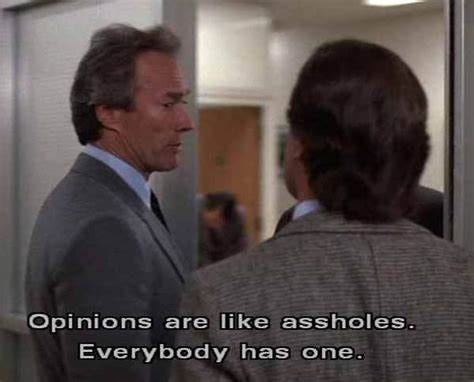
Listening is valuable, with maybe a little wise nudge here and there to boil things down and simplify. Although talk is cheap, it’s also time, and time is both expensive and valuable.
My kids are GenZ, and for much of their developing lives, they’ve been completely propagandized with reasons to find insecurities, anxieties, and existential fear; commensurate to this are myriad options to self-diagnose whatever flavors of mental illness are currently popular. This has been a theme their whole lives. Some of it real, but a lot of it “irrational fear” - aka “phobia”. And they, for the most part, picked up their smart-phones not too long after we did. I, like many GenX parents, didn’t realize the true and insidious nature and scope of it as it evolved. We were just trying to keep up in a rapidly changing world as we went, learn as we go, and this to me is all in retrospect.
This world they’re in is so completely different than our world - at least the world that’s been created and programmed in their own minds.
We have dragged our kids in to the political arena in literally every sense by now, all the way down to their physical bodies and in to their minds and souls. We’ve placed a burden of false responsibility and accountability that lacks clear actionable direction save “hold this anxiety and pick up this hot new guilt-ridden diagnosis”, and layered in elephantine levels of rhinoceros fear upon them that far outpace a developing mind to be able to process.
It’s been said that parenting gives us the opportunity to parent ourselves. This has certainly proven to be very true in my case.
As a grandparent now, I’m more committed than ever to share with him the GenX ethos. It’s not perfect. Yes, I do know it has limits and can take on a selfish connotation but it’s a mindset of freedom and self-determination. And it’s a mindset of getting out and active in your world. And at the very least it’s honest and true to oneself. I can’t save the world, but I can help save my grandson by showing him that it’s not his burden to save the world.
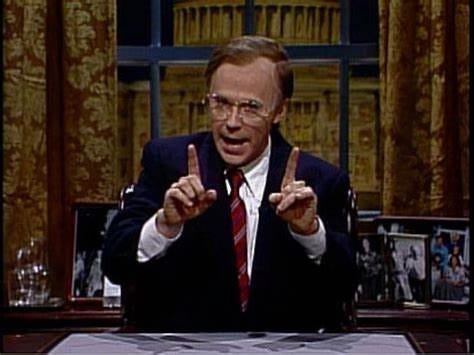
And that it’s all a joke, even when it isn’t.
I’m there for him when he wants to talk. I listen. I’m engaged. Mostly we “do” things because talk for its own sake is the cheapest thing that’s out there. Our therapy is in action, and talk then becomes a good narration, a complement, to accompany and caption that action.
Get busy. Go tear some stuff up. Assign a chore. Hold a consequence. Be an available ear. Be present. Touch grass. Let him pick himself up after he falls. Give a reward. Encourage and reward him to be “good.” Not a “good global citizen,” just “good.” A good and decent human being.
And occasionally, let’s be a little “bad.”
Amen Willy.
I remember freedom…….thanks Willy.